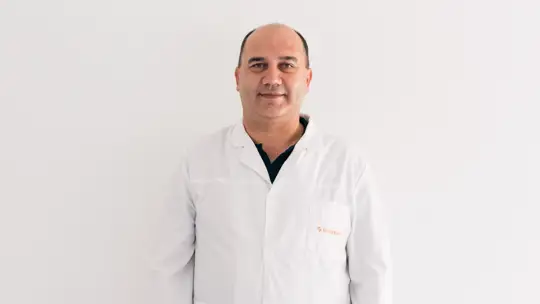
Nurses are the pulse of healthcare - the professionals who stand closest to patients, translate clinical care into human reassurance, and bring calm and consistency to demanding treatment journeys. At Diaverum, nurses make up the majority of our workforce, a reflection of just how central their role is in delivering life-enhancing renal care. This is especially true in dialysis, where care is frequent, long-term and above all, personal. Trust is built over time - through presence, attention to detail, and the small gestures that make patients feel safe, seen and supported.
This is the backdrop to the story that follows: the experience of Gabriel Alpalhão, Head Nurse of Diaverum Lumiar - a name that literally translates as “light”. And for many patients and colleagues, that feels fitting. His steady presence, calm leadership and everyday compassion have made him a constant source of reassurance in a place where consistency matters most, and a shining example of the role patient experience can make all the difference.
Most people will hopefully never fully understand what it means to live on dialysis - the routine, the exhaustion, the discipline it demands, and the daily limitations it places on a person’s life. For our patients, haemodialysis is not something that happens occasionally. It shapes their weeks, their energy, their lives. In these treatments, nurses and patients walk side by side on that path, often for years. And that reality is what guides how I work, every day.
When I learned about this recognition, I felt enormous gratitude and a deep sense of responsibility. Of course there was pride, but more than anything, it felt like a quiet acknowledgment of the daily work and countless moments that define life in our clinic - with patients, and with the team.
The first thing I thought about was the patients. I thought about the conversations during haemodialysis sessions, the repeated questions, the small progress that sometimes goes unnoticed but makes all the difference. I also thought about the colleagues I work with every day, because moments like this are never about one person. They grow out of continuous care, closeness, and the way knowledge and responsibility are shared.
After sixteen years at the Lumiar clinic, that sense of shared responsibility is what defines my work. A good day for me is a day when patients feel safe, listened to, and supported. I focus on the person, not just the treatment, because for patients each day of haemodialysis is important - and often demanding. That awareness shapes how I show up every day.
Trust is built slowly. It comes from presence, consistency and clear communication. I try to be available, to listen genuinely, and to explain doubts and concerns in a simple and honest way, respecting each person’s pace. Over time, those moments add up to something meaningful.
I’m fortunate to work in a team where this way of caring is shared. There is a strong culture of mutual support, open communication and knowledge-sharing, which makes it easier to make good decisions and deliver safe care. Working alongside people who value different perspectives but are aligned around shared goals creates a positive environment — not just for professionals, but for patients. What makes the Lumiar team special is a genuine commitment to people.
Empathy and commitment aren’t abstract ideas for me; they show up in daily practice. Empathy means recognising that each person experiences illness in their own way and adapting care to their needs, emotions and context. Commitment means maintaining the same standard of care in every session, even when the pace is demanding — ensuring safety, clarity and follow-up, without losing sight of the individual.
In haemodialysis, patient experience is not shaped by a single moment - it is shaped by repetition. A typical patient comes to the clinic three times a week, often for four hours at a time. Over months and years, the care environment becomes part of their life. What I try to put into practice every day is the understanding that the way we communicate, listen and build relationships directly shapes how patients feel about their treatment and their ability to live with it. How we speak to people, how we present who we are, and how supported they feel matters just as much as the clinical care itself.
It’s often the smallest gestures that make the greatest difference. An attentive greeting. Calling the patient by name. Explaining what will happen before each procedure. Listening without rushing. Adjusting care on a difficult day. These actions convey respect, safety and presence. For someone undergoing haemodialysis several times a week, feeling recognised as a person — not just as a patient — makes a real difference.
Over the past two years, I’ve also learned something about resilience from a more personal place. While continuing my work at the clinic, I’ve been navigating my own health journey. That experience has deepened my understanding of vulnerability - and reinforced why empathy, presence and reassurance matter so much in care.
Even during that time, being part of the team remained important to me. Supporting colleagues, staying connected, and continuing to contribute gave me strength. Leadership, for me, has never been about distance - it’s about being present, approachable, and willing to share responsibility.
On a personal level, this recognition has been both validating and motivating. It confirms that care rooted in empathy, closeness and daily commitment has value and impact. It strengthens my sense of purpose as a nurse and reminds me why I chose this profession. At the same time, it brings a renewed sense of responsibility - to keep learning, improving and caring with the same dedication, every day.
Caring goes far beyond the technical procedure. In haemodialysis, consistency, attention to detail and relationships built on trust are just as important as clinical competence. Each session is an opportunity to listen, inform and support — always respecting the person behind the treatment.
Has this story inspired you to join Diaverum? Visit our Careers website and discover openings across the world.